The Examiner’s Direct Answer: What Is the Best Way to Prepare?
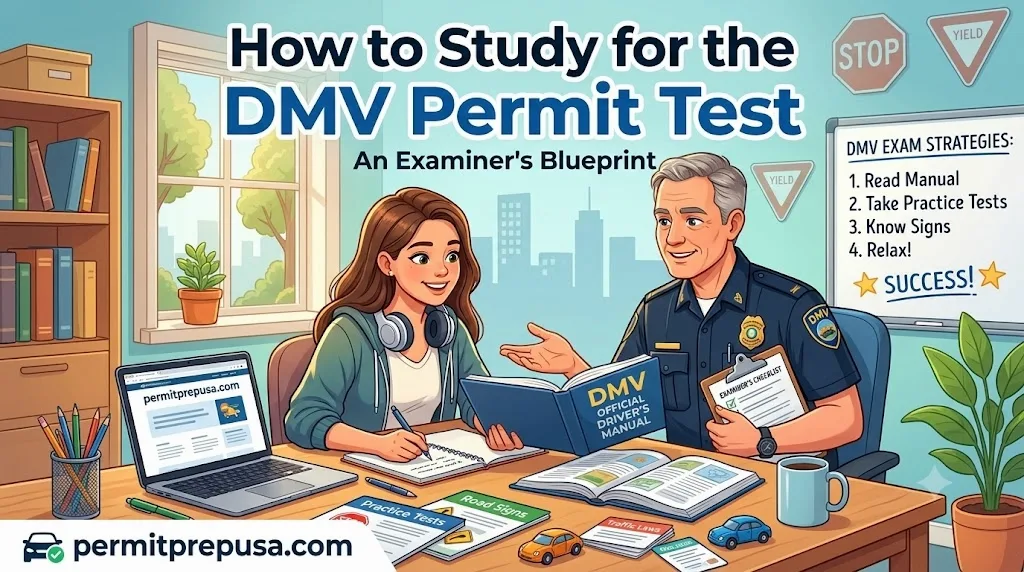
Quick-Answer Box: The most effective way to study for the DMV permit test is a strict three-phase approach: 1) Read your official state driver's manual cover-to-cover, highlighting specific numbers (fines, distances, BAC limits). 2) Take state-specific online practice tests to identify your weak spots. 3) Cross-reference every incorrect practice answer back to the manual. You should dedicate at least 1 to 2 weeks of focused study, aiming to consistently score above a 90% on practice exams before walking into the DMV.
Every week, I watch dozens of applicants walk up to my counter, pay their application fee, and confidently march toward the testing kiosks. Less than twenty minutes later, a significant portion of them walk back with a red failure slip. When I ask them how they prepared, the answers are almost always the same: "I skimmed the book last night," or "I just used my common sense," or "I took one free quiz on my phone in the parking lot."
As a DMV examiner, I can tell you unequivocally that these preparation methods are a guaranteed recipe for failure. The written knowledge exam is not a casual trivia game; it is a rigid, technical evaluation of state law. You are applying for a legal credential to operate heavy machinery on public infrastructure. We design this test to be a regulatory gatekeeper, ensuring that only those who fully understand traffic safety protocols get behind the wheel.
If you want to bypass the frustration of failing, paying retest fees, and waiting through mandatory penalty periods, you need to change your approach. You must study systematically. Let's break down the ultimate examiner-approved blueprint on how to properly study for your permit test, phase by phase.
Phase 1: Decoding the Official DMV Handbook
The biggest mistake applicants make is treating the state driver's manual like a suggestion rather than a legal blueprint. Every single question on your test—without exception—is pulled directly from the text of your specific state's manual. If you want to know what is the DMV permit test fundamentally, it is simply a reading comprehension exam based on that one specific book.
However, you cannot read the manual like a novel. You must read it like a technical document. Here is how to extract the exact data our computers will test you on:
- Hunt for the Numbers: DMV tests are obsessed with precise numerical values because they leave no room for debate. Grab a highlighter and mark every single number you see. You need to memorize exact stopping distances (e.g., 200 feet vs. 500 feet), exact speed limits in specific zones (school zones, residential districts, blind intersections), and exact blood alcohol concentration (BAC) limits for minors versus adults.
- Focus on Immediate Suspensions and Fines: Our agency is highly focused on compliance. You will almost certainly face questions regarding the administrative penalties for DUI, implied consent laws, and what happens if you refuse a breathalyzer test. Understand the specific license suspension timelines for these offenses.
- Master the "Right-of-Way" Hierarchy: Do not just skim the section on intersections. You must understand the legal order of operations. Who has the right of way at a four-way stop when two cars arrive simultaneously? What is the protocol for yielding to pedestrians at unmarked crosswalks? This is where a massive percentage of applicants lose their score margins.
Phase 2: The Transition to Active Recall
Reading the manual builds your foundational knowledge, but reading is passive. To survive the pressure of our testing kiosks, you must transition to active recall. This is where practice exams become your most valuable tool.
The goal here is not just to take tests, but to identify the specific chapters where your knowledge is weak. Many students wonder how hard is the DMV permit test; the answer is that it is incredibly difficult if you don't expose your blind spots before test day.
When incorporating practice exams into your routine, follow this strict protocol:
- Do Not Use Open Notes: When taking a practice test at home, replicate the testing environment. Put the manual away. If you rely on your notes during practice, you are developing a false sense of security that will shatter the moment you sit at our restricted terminals.
- Review Every Single Mistake: When you get a question wrong on a simulator, do not just look at the correct answer and move on. Open your state manual, find the exact paragraph that covers that law, and read it again. This builds a mental bridge between your error and the source material.
- Beware of Outdated Material: Traffic laws change. Ensure the online practice tests you are taking are calibrated for the current year and, most importantly, for your specific state. A practice test designed for New York will not help you pass the Texas exam.
If you want to understand the stark differences between studying at home and testing in our office, review our detailed guide on the DMV practice test vs real permit test environment.
The Study Timeline: How to Pace Yourself
Cramming the night before your appointment is a terrible strategy. The sheer volume of technical data—from pavement markings to insurance requirements—cannot be absorbed into your long-term memory in just six hours. When test anxiety hits you in our lobby, that crammed information will evaporate.
To avoid this, I recommend a structured timeline. I have outlined a highly effective 14-day study schedule in a mobile-friendly format below. This pacing ensures you cover every section without burning out.
| Study Phase & Timeline | Required Actions & Focus Areas |
|---|---|
| Days 1 to 4: The Foundation (Manual Review) |
Read the State Handbook: Focus strictly on road rules, traffic signs, and pavement markings. Highlight key data. |
| Days 5 to 7: Technical Law (Fines & Limits) |
Master the Metrics: Memorize speed limits, BAC thresholds, following distances, and license suspension penalties. |
| Days 8 to 11: Active Testing (Simulators) |
Take Diagnostic Exams: Complete multiple full-length practice tests without notes. Identify weak categories. |
| Days 12 to 14: Final Polish (Targeted Review) |
Close the Knowledge Gaps: Re-read the manual sections matching your missed questions. Achieve a 90%+ practice average. |
Beware of the "Common Sense" Trap
During my shifts, I frequently speak with applicants who are highly educated and generally excellent test-takers. They often fail their first attempt because they fall into the "common sense trap." They assume that because they have been a passenger in a car for 16 years, they already know the rules of the road by osmosis.
Let me be clear: common sense will tell you that a red light means stop. Common sense will not tell you the exact distance you must park away from a fire hydrant (which varies by state). Common sense will not tell you the specific legal fine for overtaking a school bus. The DMV exam tests you on exact statutory law, not general safety vibes. You must respect the material enough to study the specifics.
Establishing Your Target Score
Do not aim for the bare minimum. If your state requires an 80% to pass, consistently scoring an 80% on practice tests means you are walking on a razor's edge. Once you sit at our terminal, the stress of the environment, the ticking timer, and the unfamiliar wording of the official questions will naturally drop your performance by at least 10%.
You need to build a massive safety buffer. We discussed this concept extensively in our guide detailing exactly what score do you need to pass the DMV permit test. Your goal at home should be to hit a 90% or 95% on your practice tests repeatedly. When you build a buffer that large, even if you panic and make a few careless errors in our office, you will still easily clear the state's minimum threshold and walk out with your permit.
